
 Summarize this article with:





Veneers or Implants in Turkey: Which Is Right?
Written by Novin Ariana
A brighter smile can change how you speak, eat, and show up in photographs. But when researching veneers or implants turkey, the first decision is not about choosing the most affordable package. It is about identifying whether your natural tooth can be preserved or whether it needs to be replaced.
Veneers and dental implants solve very different problems. Veneers enhance the visible front surface of healthy teeth. Implants replace missing teeth from the root upward. Both can create natural-looking, long-lasting results when planned by experienced dental specialists, but choosing the wrong option can compromise comfort, function, and value over time.
Table of Contents
Veneers or Implants in Turkey: The Core Difference
A successful smile makeover begins with an accurate diagnosis rather than selecting the quickest or least expensive treatment. Although veneers and dental implants can both improve your smile, they are designed for entirely different clinical situations.
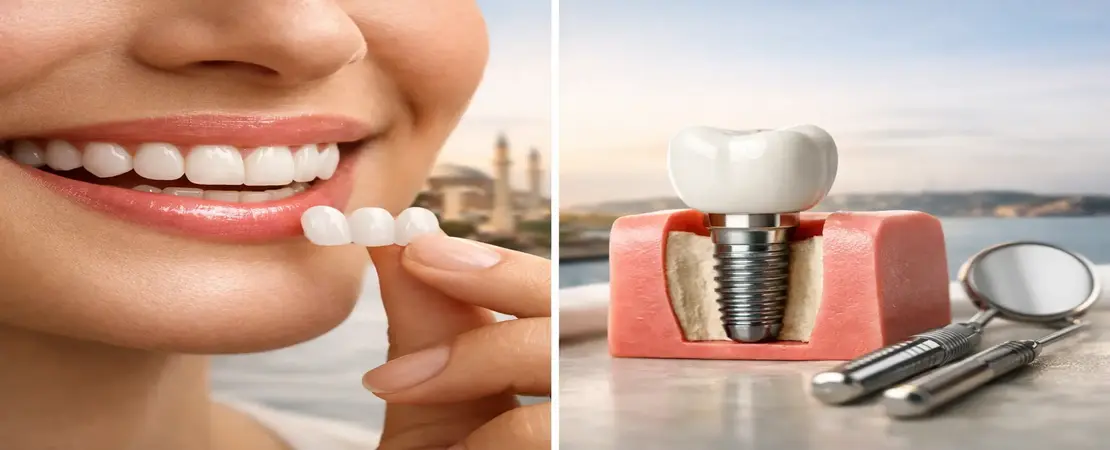
A dental veneer is a thin porcelain or ceramic restoration bonded to the front surface of an existing tooth. It is intended to improve color, shape, proportion, and minor cosmetic imperfections while preserving as much healthy tooth structure as possible.
A dental implant, by contrast, replaces the root of a missing or non-restorable tooth. A titanium implant is surgically placed into the jawbone, where it integrates with the surrounding bone before supporting a custom-made dental crown.
Because one treatment enhances natural teeth while the other replaces them, choosing between veneers and implants depends on the condition of your oral health rather than appearance alone. A comprehensive clinical examination—including digital imaging, bite analysis, and periodontal assessment—is essential before any treatment recommendation is made.
When Veneers May Be the Better Choice
Veneers are best suited for patients whose teeth are healthy but whose smiles could benefit from cosmetic enhancement. Common reasons include deep discoloration that cannot be corrected with whitening, chipped enamel, worn edges, irregular tooth shape, small spaces between teeth, or minor alignment concerns.
One of the greatest advantages of veneers is their conservative approach. Compared with full-coverage crowns, modern porcelain veneers often require only minimal enamel preparation, allowing much of the natural tooth to remain intact.
Today’s smile design process goes beyond simply creating whiter teeth. Dentists evaluate facial proportions, lip dynamics, tooth symmetry, gum contours, and smile harmony to produce results that complement each patient’s facial features instead of creating an artificial appearance.
Before veneers are recommended, dentists should also evaluate bite stability, gum health, and habits such as teeth grinding. Addressing these factors beforehand helps protect the restorations and improves their long-term durability.
What to expect from veneer treatment
Veneer treatment typically begins with a clinical examination, digital imaging, and discussion of your goals. Your dentist may recommend whitening, gum treatment, orthodontic correction, or restorative work before veneers, depending on your oral health.
The final veneers are custom fabricated to fit precisely and blend with surrounding teeth. Porcelain veneers are known for their stain resistance and light-reflecting qualities, while the most suitable material depends on your bite, tooth condition, and desired outcome. With careful hygiene and regular dental care, veneers can remain attractive for many years, though they are not considered lifetime restorations and may eventually need replacement.
Ready to change how you look and feel?
Get your consultation now — your new self is waiting.
When Dental Implants May Be the Better Choice
Dental implants are recommended when a tooth has already been lost or cannot be predictably preserved because of severe decay, trauma, fracture, or advanced periodontal disease.
Beyond replacing a missing tooth, implants help restore chewing efficiency, maintain speech, and preserve jawbone volume. When teeth are lost, the surrounding bone gradually shrinks because it no longer receives stimulation during chewing. Implant placement helps maintain bone function, reducing long-term changes in facial support and neighboring tooth position.
Depending on your needs, a single implant may support one crown, while multiple implants can anchor bridges or full-arch restorations. Every treatment plan should be based on comprehensive diagnostics, including CBCT imaging, bone quality assessment, bite evaluation, and medical history.
Implant Planning Is Individualized
No two implant cases are identical.
Some patients have sufficient bone for immediate implant placement, while others may require procedures such as bone grafting, sinus augmentation, or periodontal therapy before treatment can begin safely.
These additional procedures influence treatment timing, healing, and travel planning. Although online consultations and radiographs provide valuable preliminary information, the final treatment plan should always be confirmed following an in-person clinical examination.
Recovery and Long-Term Maintenance
Implant treatment requires patience because successful healing depends on osseointegration—the biological process in which the implant fuses with the surrounding jawbone. Healing time varies according to bone quality, overall health, and whether additional procedures were required before placement.
Long-term success also depends on excellent oral hygiene. Daily brushing, flossing or interdental cleaning, professional maintenance visits, and avoiding tobacco significantly improve implant longevity. While dental implants demonstrate high long-term success rates in appropriate candidates, ongoing maintenance remains an important part of protecting the investment.
Ready to change how you look and feel?
Get your consultation now — your new self is waiting.
Comparing Cost, Treatment Time, and Long-Term Value
Turkey continues to attract international dental patients by combining experienced clinicians, advanced technology, and competitive pricing. However, treatment decisions should never be based solely on the lowest advertised cost.
Veneers are generally completed during a single treatment visit over several days because they do not require surgical healing. Implant treatment, however, may involve multiple stages depending on bone healing, grafting requirements, and the timing of final crown placement.
Long-term value extends beyond the initial price. Patients should consider the quality of diagnostic planning, the experience of the treating dentist, the materials used, laboratory standards, aftercare, and the level of clinical support provided throughout treatment. Investing in appropriate treatment from the beginning often reduces the likelihood of future corrective procedures.


Choosing the Right Dental Clinic in Turkey
Selecting a qualified dental clinic involves more than comparing package prices. Ask who will perform your treatment, what imaging and diagnostics are included, which implant systems or ceramic materials are used, and how treatment decisions are made.
It is equally important to understand what happens after treatment. Reliable clinics provide transparent pricing, realistic timelines, comprehensive aftercare instructions, and a clear protocol for follow-up should questions arise after returning home.
At Novin Ariana Health Clinic, every international patient receives an individualized treatment plan based on clinical findings rather than a one-size-fits-all approach. Comprehensive treatment coordination, multilingual patient support, VIP airport transfers, premium accommodation options, and ongoing post-treatment guidance help create a comfortable and well-organized treatment experience.
Ready to change how you look and feel?
Get your consultation now — your new self is waiting.
Making the Right Decision for Your Smile
Choosing between veneers and dental implants is not simply a cosmetic decision—it is a clinical one. The most successful outcomes are achieved when treatment preserves healthy tooth structure whenever possible while restoring function when replacement becomes necessary.
Whether your goal is improving the appearance of healthy teeth or replacing missing teeth with a long-term restorative solution, the first step should always be a comprehensive evaluation by an experienced dental team. A personalized treatment plan built on accurate diagnosis, evidence-based dentistry, and your individual smile goals provides the strongest foundation for long-lasting oral health and confidence.
Questions to Ask Before Choosing a Clinic in Turkey
International dental care should feel organized, not uncertain. Before committing, ask who will perform your treatment, what qualifications and specialty experience they have, and what diagnostics are included. You should also understand the material brand or type proposed, the number of appointments required, and whether your plan could change after examination.
It is equally wise to ask how complications, adjustments, or follow-up needs are handled after you return home. Reliable providers communicate clearly about what is included in the quoted price and what may create additional costs, such as grafting, extractions, temporary restorations, or treatment for gum disease.
At Novin Ariana Health Clinic, international patients receive personalized treatment coordination designed around clinical assessment, travel comfort, and long-term support. From multilingual communication and VIP transfers to premium accommodation options and post-treatment guidance, the objective is to make a complex decision feel clear and well supported.
Frequently Asked Questions
Our representatives for all countries are 24/7 available to support you at any time
Neither is universally better—they solve different problems. Dental veneers improve the appearance of healthy teeth by covering the front surface, while dental implants replace missing or severely damaged teeth. The right choice depends on whether your natural tooth can be preserved.
Veneers may be the better option if you have:
- Healthy tooth roots
- Chipped or worn teeth
- Tooth discoloration that doesn't respond to whitening
- Small gaps between teeth
- Minor alignment issues
- Cosmetic concerns rather than tooth loss
Dental implants are typically recommended if you have:
- One or more missing teeth
- Teeth that cannot be saved due to decay or trauma
- Advanced periodontal disease
- Significant tooth fractures below the gum line
- A need for a permanent tooth replacement
No. Veneers only cover existing natural teeth. If a tooth is missing, a dental implant, bridge, or denture is usually required.
- Dental implants: Often 20 years to a lifetime with proper care.
- Porcelain veneers: Typically last 10–15 years, sometimes longer with excellent maintenance.
Dental implants are more invasive because they involve surgically placing a titanium implant into the jawbone. Veneers require only minimal reshaping of the tooth enamel and do not involve surgery.
Dental implants usually cost more because they involve surgery, implant components, and healing time. Veneers are generally less expensive per tooth, although treating many teeth can increase the total cost.
Yes. Many patients combine treatments. For example:
- Dental implants replace missing teeth.
- Veneers improve the appearance of the remaining natural teeth.
This combination can create a balanced, natural-looking smile.
Veneers
- Usually completed in 5–7 days.
- Often requires two or three appointments.
Dental implants
- Initial surgery takes a few days.
- Healing (osseointegration) typically requires 3–6 months before the final crown is placed, although some patients qualify for immediate temporary teeth.
Most patients report mild to moderate discomfort rather than severe pain. Local anesthesia is used during surgery, and post-operative discomfort is usually managed with prescribed medications.
Both can produce highly natural results when planned properly.
- Veneers are designed to match adjacent natural teeth.
- Implant crowns are custom-made to blend with your smile and bite.
Turkey has become a leading destination for cosmetic and restorative dentistry because many clinics offer:
- Experienced dentists
- Modern digital smile design technology
- International patient coordinators
- High-quality materials
- Comprehensive treatment packages
- Significant cost savings compared with many Western countries